Modern data engineering is no longer just about storing Parquet files on S3, ADLS, or GCS. Once your data lake starts handling incremental updates, late-arriving events, streaming ingestion, schema changes, deletes, and multi-engine analytics, plain Parquet becomes operationally weak. This is where Apache Hudi, Apache Iceberg, and Delta Lake become important.
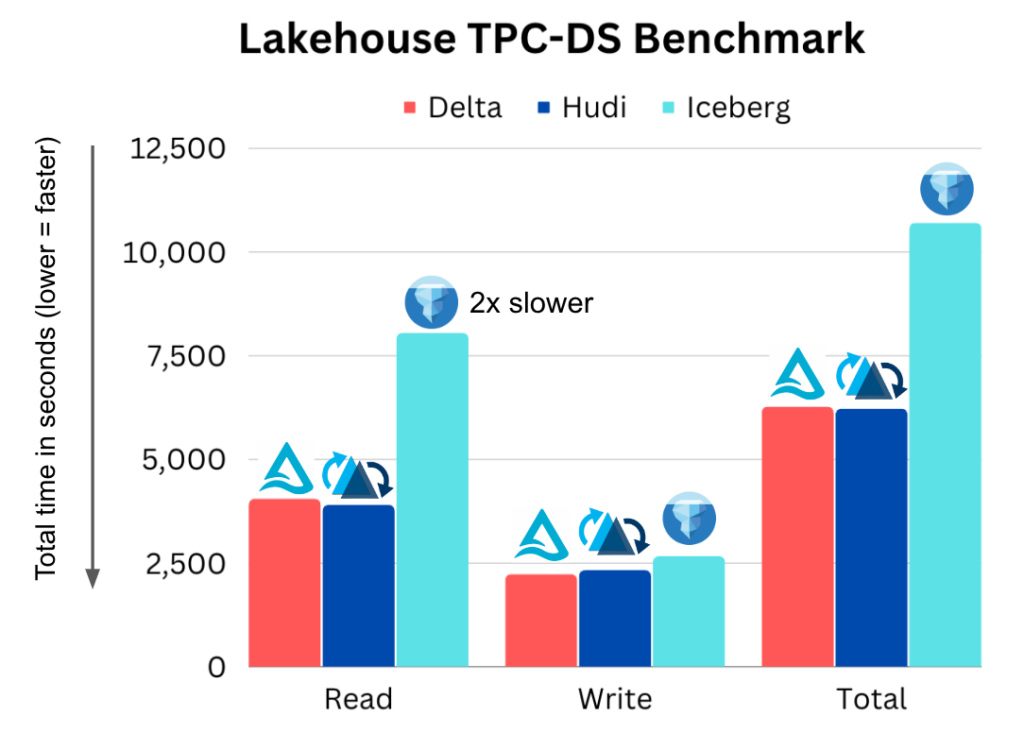
All three solve the same broad problem: making data lakes behave more like reliable analytical tables. But they are not identical. Choosing the wrong lakehouse format can affect ingestion speed, query performance, compaction cost, governance, and long-term platform flexibility.
Quick Comparison: Hudi vs Iceberg vs Delta Lake
| Area | Apache Hudi | Apache Iceberg | Delta Lake |
| Best Fit | Incremental ingestion, CDC, upserts | Large analytic tables, multi-engine lakehouse | Spark-first lakehouse, Databricks-heavy platforms |
| Upserts/Deletes | Very Strong | Strong | Strong |
| Streaming Ingestion | Very Strong | Good | Strong |
| Query Engine Support | Spark, Flink, Presto, Hive, Trino | Spark, Trino, Flink, Presto, Hive, Impala | Strong Spark support, growing multi-engine support |
| Table Evolution | Good | Excellent | Good |
| Operational Complexity | Medium to High | Medium | Low to Medium |
| Best For | CDC pipelines and mutable datasets | Open lakehouse architecture | Spark/Databricks workloads |
Apache Hudi: Best for CDC, Upserts, and Incremental Pipelines
Apache Hudi is often the strongest choice when your workload is ingestion-heavy. If you are building pipelines where records are constantly updated, deleted, or merged from operational systems, Hudi deserves serious consideration.
A typical use case is a data pipeline that ingests changes from PostgreSQL, MySQL, Kafka, or Debezium into a lakehouse table. Hudi provides strong support for record-level operations and incremental processing patterns, which makes it useful for near real-time data engineering platforms.
Use Apache Hudi when:
- You need frequent upserts
- You process CDC pipelines
- You want incremental pulls
- You need streaming-friendly lakehouse ingestion
- Your data changes often after initial write
A practical example: if 20–40% of your daily data volume involves updates or corrections, Hudi can be a strong fit because it was designed with mutable data lakehouse workloads in mind.
Apache Iceberg: Best for Open, Large-Scale Analytics
Apache Iceberg is usually the best choice when you are building an open, engine-agnostic analytical data lake. It is especially strong when tables become very large and multiple query engines need to access the same data reliably.
Iceberg’s biggest strength is its table metadata design. It handles schema evolution, hidden partitioning, snapshot isolation, and time travel in a clean way. For data teams using Apache Spark for ETL, Trino for BI, and Flink for streaming, Apache Iceberg often becomes the most flexible long-term open table format.
Use Apache Iceberg when:
- You want strong multi-engine compatibility
- You have very large analytical tables
- You want clean partition evolution
- You care about long-term open lakehouse design
- You do not want to be tightly tied to one processing engine
A practical rule: if your platform is expected to support multiple compute engines over time, Iceberg is often the safest architectural bet.
Delta Lake: Best for Spark and Databricks-Centric Workloads
Delta Lake is an excellent choice when your platform is heavily based on Apache Spark or Databricks. It provides ACID transactions, schema enforcement, time travel, merge operations, and strong Spark integration.
For teams already using Databricks, Delta Lake is usually the most natural and productive option. It reduces setup friction, has mature Spark APIs, and supports many practical data lakehouse features out of the box.
Use Delta Lake when:
- Your workloads are mostly Spark-based
- You are using Databricks
- You want simple ACID transactions on data lakes
- You need reliable batch and streaming pipelines
- You want a lower operational learning curve
A practical example: if your team is running PySpark jobs on Databricks and wants fast productivity, Delta Lake will often be the easiest Spark table format to adopt.
Quantified Decision Matrix
Here is a practical scoring matrix from a data engineering perspective. Scores are directional, not absolute benchmarks.
| Requirement | Hudi | Iceberg | Delta Lake |
| CDC / Upsert-heavy pipelines | 9/10 | 7/10 | 8/10 |
| Multi-engine analytics | 7/10 | 9/10 | 7/10 |
| Spark simplicity | 7/10 | 8/10 | 9/10 |
| Streaming ingestion | 9/10 | 7/10 | 8/10 |
| Large table metadata handling | 7/10 | 9/10 | 8/10 |
| Operational simplicity | 6/10 | 7/10 | 8/10 |
| Open architecture flexibility | 7/10 | 9/10 | 10/10 |
Choosing Based on Workload Priorities
Most comparisons focus only on features. In real projects, the better question is:
What is the dominant pain in your pipeline?
- If your pain is ingestion and updates, choose Apache Hudi.
- If your pain is open analytics across many engines, choose Apache Iceberg.
- If your pain is Spark productivity and Databricks integration, choose Delta Lake.
That single question is often more useful than comparing 50 features.
When to Use Which One
- Choose Apache Hudi if you are building CDC pipelines, near real-time ingestion, mutable datasets, or operational lakehouse tables where updates are frequent.
- Choose Apache Iceberg if you are designing a long-term open lakehouse architecture with Spark, Trino, Flink, or multiple query engines accessing the same tables.
- Choose Delta Lake if your platform is Spark-first, Databricks-first, or you want fast adoption with strong ACID guarantees and simple developer experience.
Practical Recommendation for Data Engineers
For most new data engineering teams, the decision can be simplified:
- Databricks-heavy team → start with Delta Lake
- Open lakehouse with Trino/Flink/Spark → choose Apache Iceberg
- CDC and incremental ingestion platform → choose Apache Hudi
- Unsure and still experimenting → prototype with your actual write/update/query pattern before committing
Do not choose a data lake table format only because it is popular. Choose it based on workload behavior: write pattern, update frequency, query engine mix, latency requirement, and operational ownership.
Final Thought
Apache Hudi, Apache Iceberg, and Delta Lake are all powerful lakehouse technologies, but they optimize for different realities. A good data engineer does not ask “Which one is best?” Instead, they ask “Which one fits this workload, team, and platform architecture?”
If you are designing a data lakehouse, debugging Spark pipelines, or deciding between Hudi vs Iceberg vs Delta Lake for a real project, TheCodeWizard can help you move faster through practical guidance, code reviews, architecture reviews, and focused QuickCast sessions. Explore TheCodeWizard services page to see how we work with data engineers, startups, and growing teams to help them design, build, and optimize modern data platforms with confidence.